French windowing rules: who wants what?
Our inventory of the complaints and grievances of streaming services and TV channels in France
Infobligations is available at this link:1 infobligations.arvester.eu
Article written in French and available in its original version at this link.
In recent years, the financing of French creative production has undergone a major structural overhaul driven by the rise of video-on-demand. This shift is redefining the balance of power within a model historically based on the primacy of cinema and a temporal segmentation of the access to content. To ensure the long-term financing of creative production, the “chronologie des médias” therefore organises access to distribution windows according to each actor’s level of investment. Currently, this sequence places Canal+ closest to the cinema release (6 months), followed by Disney+ (9 months), then Netflix and Prime Video (17 months). The debate pits the ‘new’ entrants, who consider their waiting periods disproportionate given their growing financial clout (27% of the audiovisual sector and 18% of the film industry by 2024),2 against rights holders who refuse any progress without a corresponding increase in investment.
To help navigate this regulatory maze, we published a new infographic3 at the start of the year designed to help clarify the obligations of each player regarding financing and distribution. Whilst the European Commission has launched a public consultation on the evaluation of the AVMS Directive with a view to a revision scheduled for late 2026, the sector is organising itself to make its demands heard, which we aim to summarise in this short article.
Disney’s successful blackmail
For some time now, Disney has been expressing its hostility towards the media chronology, which it considers “unfair, restrictive and ill-suited (…) to changing film-viewing habits”.4 This standoff reached a turning point in early 2025 with the signing of an unprecedented agreement, reducing its release window from 17 to just 9 months after theatrical release. In return, the company agreed to increase its investment to 25% of its turnover in France (up from 20% previously), with 14% specifically earmarked for cinema, to be phased in gradually, thereby guaranteeing funding for at least 70 films over three years. A “meagre offering” for Pascal Rogard (SACD),5 who believes the investment is paltry given the privilege secured.
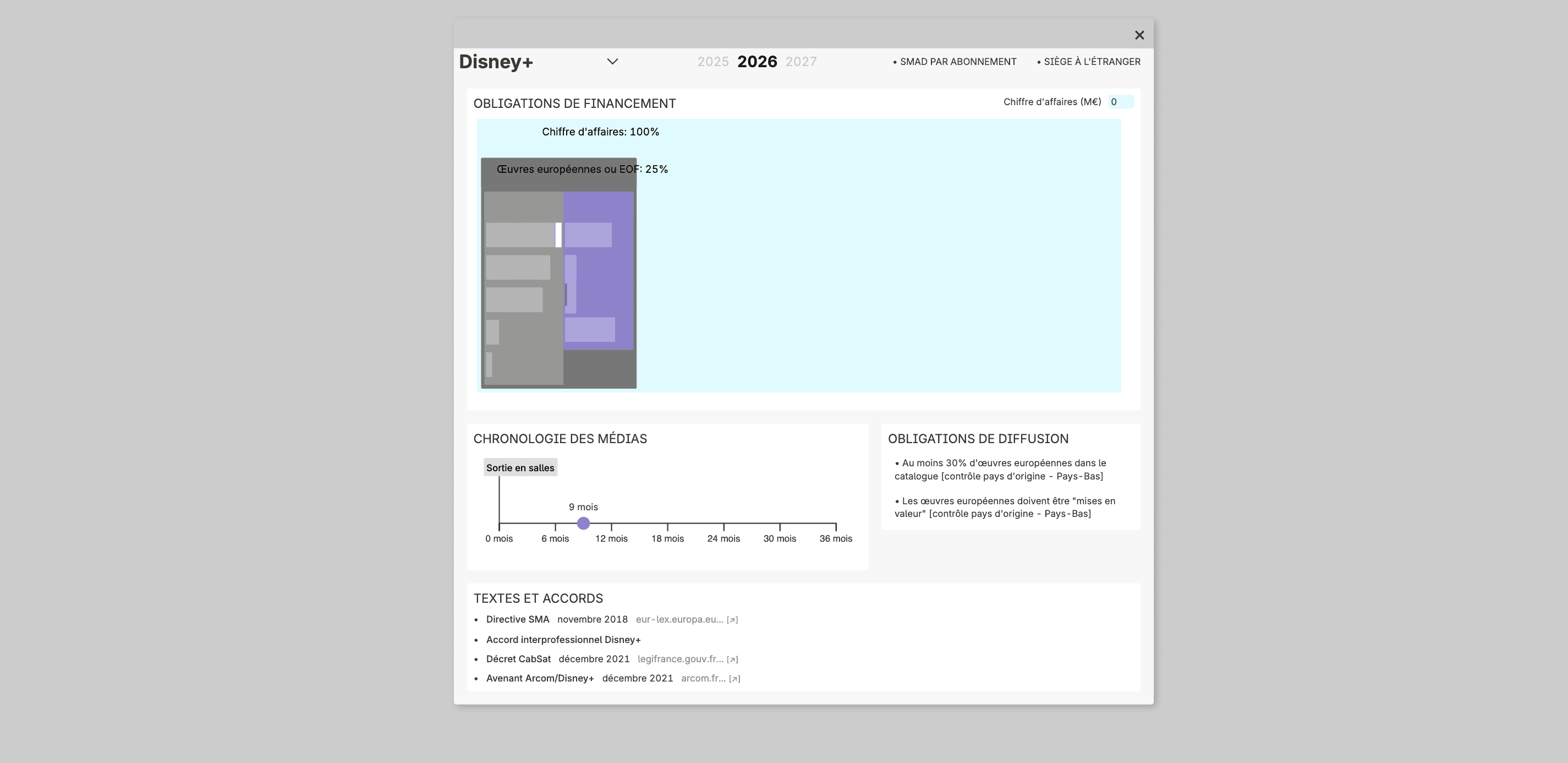
This privileged position stems from a strategy of direct pressure, with Disney repeatedly threatening to withhold its films from cinemas. The threat proved all the more effective given the group’s considerable leverage in negotiations. The leading distributor according to CNC figures, it held a 16.7% market share in 2024, ahead of Warner (11.5%) and Universal (7.5%).
Netflix and Prime Video stage an organised protest
This move by Disney has brought tensions with Netflix and Prime Video to a head, as the two platforms denounce a system they deem ‘unbalanced and unfair’.6 Currently forced to wait 17 months after theatrical release,7 Netflix and Prime Video are challenging the decree by which the Ministry of Culture has extended the application of the media chronology to non-signatory players. They are criticising an administrative decision that subjects them to a timetable they did not negotiate, whilst calling for a general alignment to a 12-month delay. In their view, the Disney group’s signature alone is not representative of the sector as a whole—a lack of representativeness made all the more striking given that their financial weight in French production has become dominant, according to key figures on audiovisual production provided by Arcom in 2024.
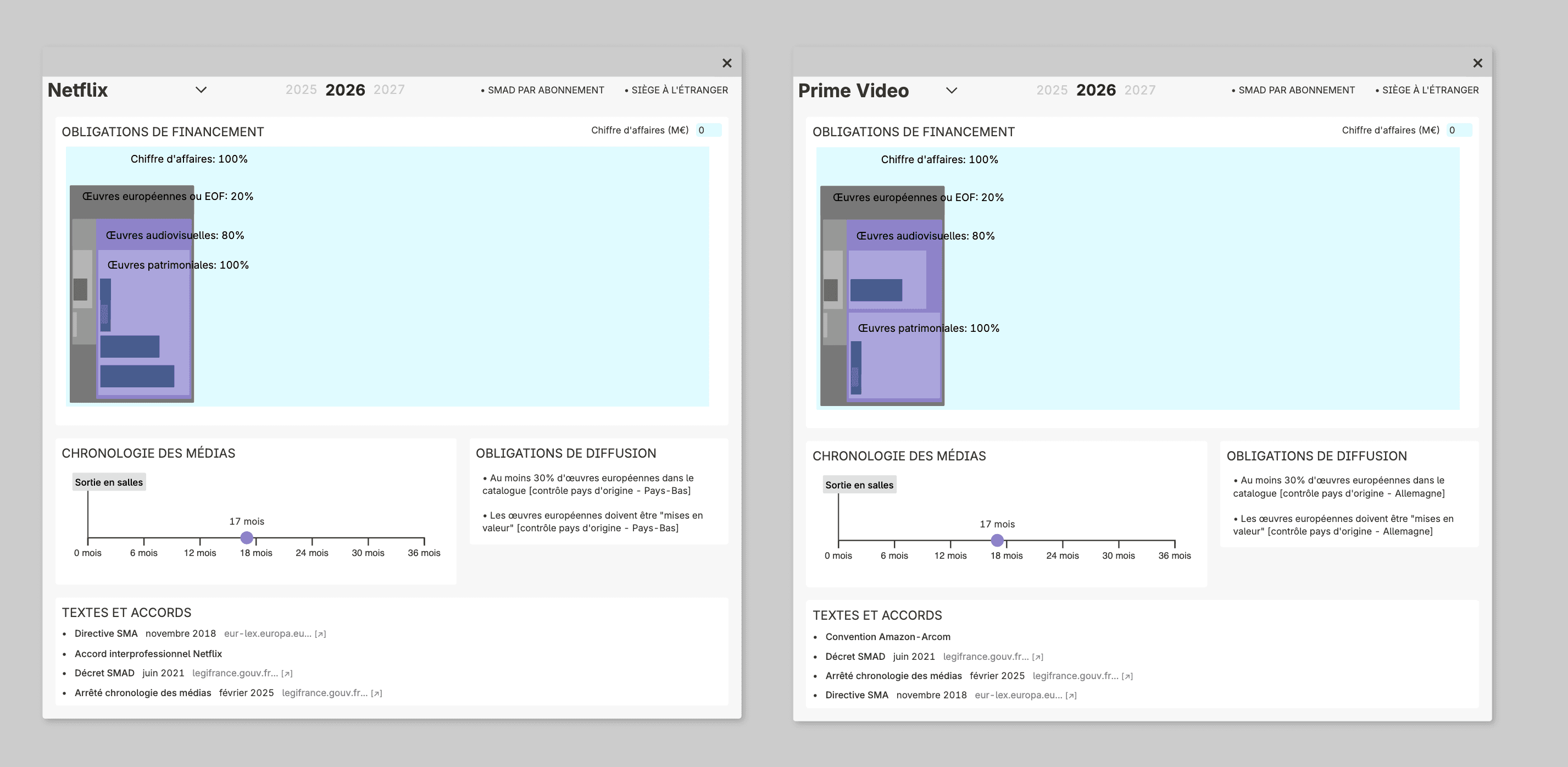
Netflix’s argument centres in particular on the discrepancy between its actual investments and the waiting period imposed. With €58 million injected into French cinema in 2024, the service argues that it invests more in absolute terms than Disney, whilst remaining stuck at 15 months. However, the platform refuses to increase its contribution rate to the cinema sector beyond the minimum of 4% of its turnover to reduce this delay, which is fuelling the deadlock in negotiations with professional organisations. For its part, Prime Video raises a legal vulnerability under European law, arguing that the Chronologie des médias is not recognised as an exception to the country of origin principle by the AVMS Directive. In order to turn this dissatisfaction into leverage, the two services have taken the case to the Conseil d’État.
This legal offensive has, however, been met with outright rejection by French industry bodies, which view the timing of the broadcast window as strictly linked to the level of financial commitment. As Marc Missonnier, president of the Union of Film Producers (UPC), pointed out to the Senate Culture Committee last March, any progress in the media chronology must necessarily be matched by a greater financial contribution. It is precisely on the definition of this ‘contribution’ that the dialogue of the deaf has set in. Netflix considers it absurd to base the calculation on a percentage of turnover rather than on a total amount invested, arguing that its current financial weight should naturally open the door to an earlier release window.
The crux of the debate lies in how the financial contribution is calculated. If the 4% rate were strictly applied to Netflix’s current turnover in France, its theoretical investment would amount to €72 million per year. However, the platform injected €58 million into the film industry in 2024. This €12 million shortfall explains why producers’ organisations are making any progress on the timetable conditional upon the strict application of this proportional rate.
Canal+’s grievances
Canal+ remains the mainstay of French film financing and is keen to make this known. In 2024, the group alone accounted for 49% of declared investments, amounting to €216 million. A new three-year agreement further secures its privileged position with a six-month broadcast window in exchange for a minimum investment of €480 million over the 2025–2027 period. However, Maxime Saada warned in an opinion piece in Le Monde8 that this model could “collapse” if the network’s exclusivity were undermined by its competitors becoming too closely aligned. The chairman of the executive board is thus threatening to reduce investment to the strict regulatory minimum should the timeframes granted to platforms be altered.
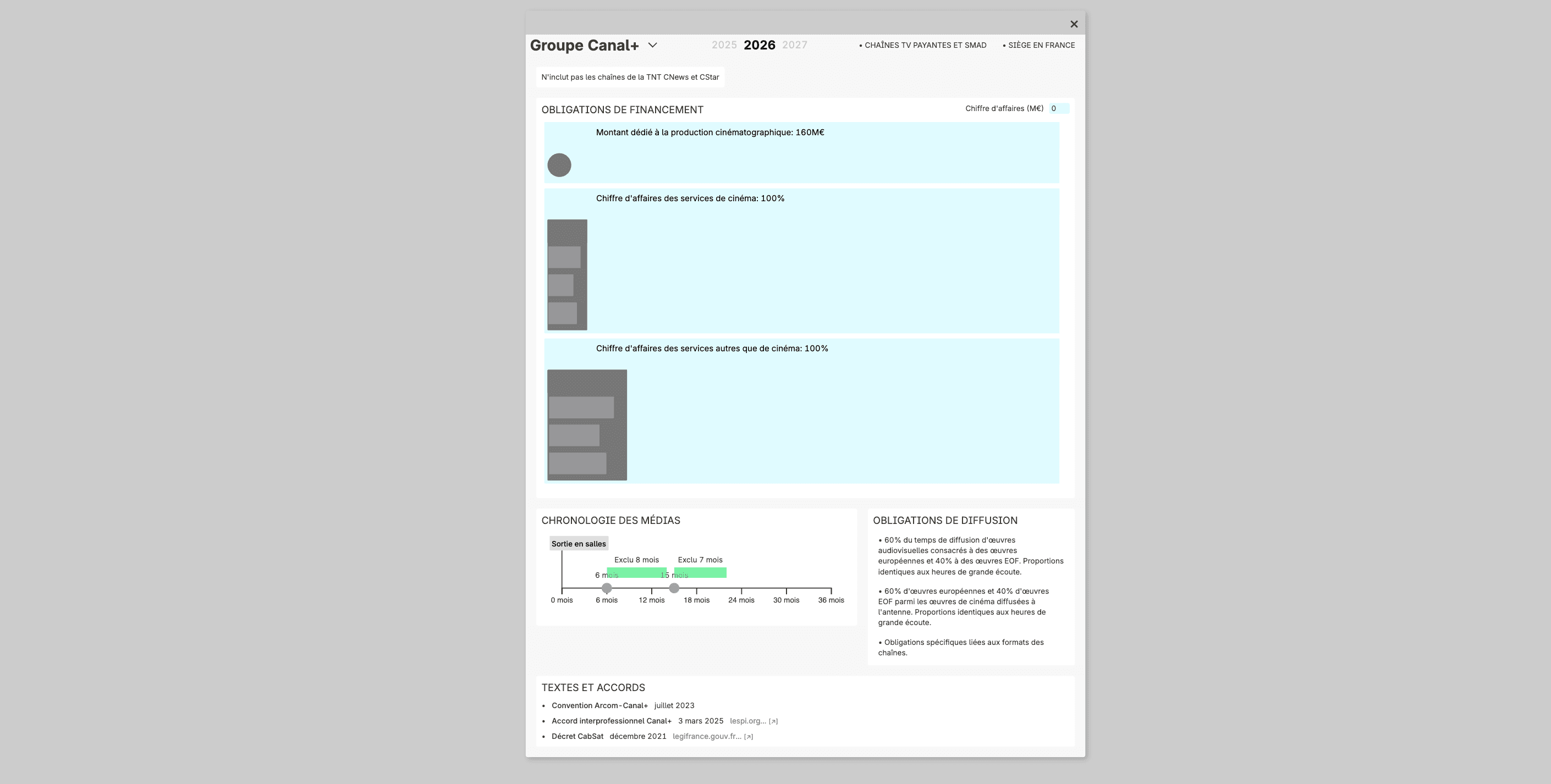
This legal threshold, set out in the TNT decree, stipulates that 12.5% of turnover must be allocated to funding European works, of which 9.5% must be for works originally produced in French. Such a reduction would bring the network’s annual investment down to around 100 million euros. During his hearing before the senators, Maxime Saada went even further, stating that if the group were pushed into a corner, it could legally split its sports and cinema offerings in order to reduce the basis for calculating its turnover. In this break-up scenario, the legal obligation would automatically fall to €50 million per year.
Finally, during a recent Senate conference on the future of the French audiovisual sector,9 the executive criticised the tax asymmetry which, in his view, distorts competition with other streaming services. He highlighted in particular that Netflix is subject to a tax rate of 17%, whereas Canal+ faces a rate of 38%.
The role of traditional linear broadcasters
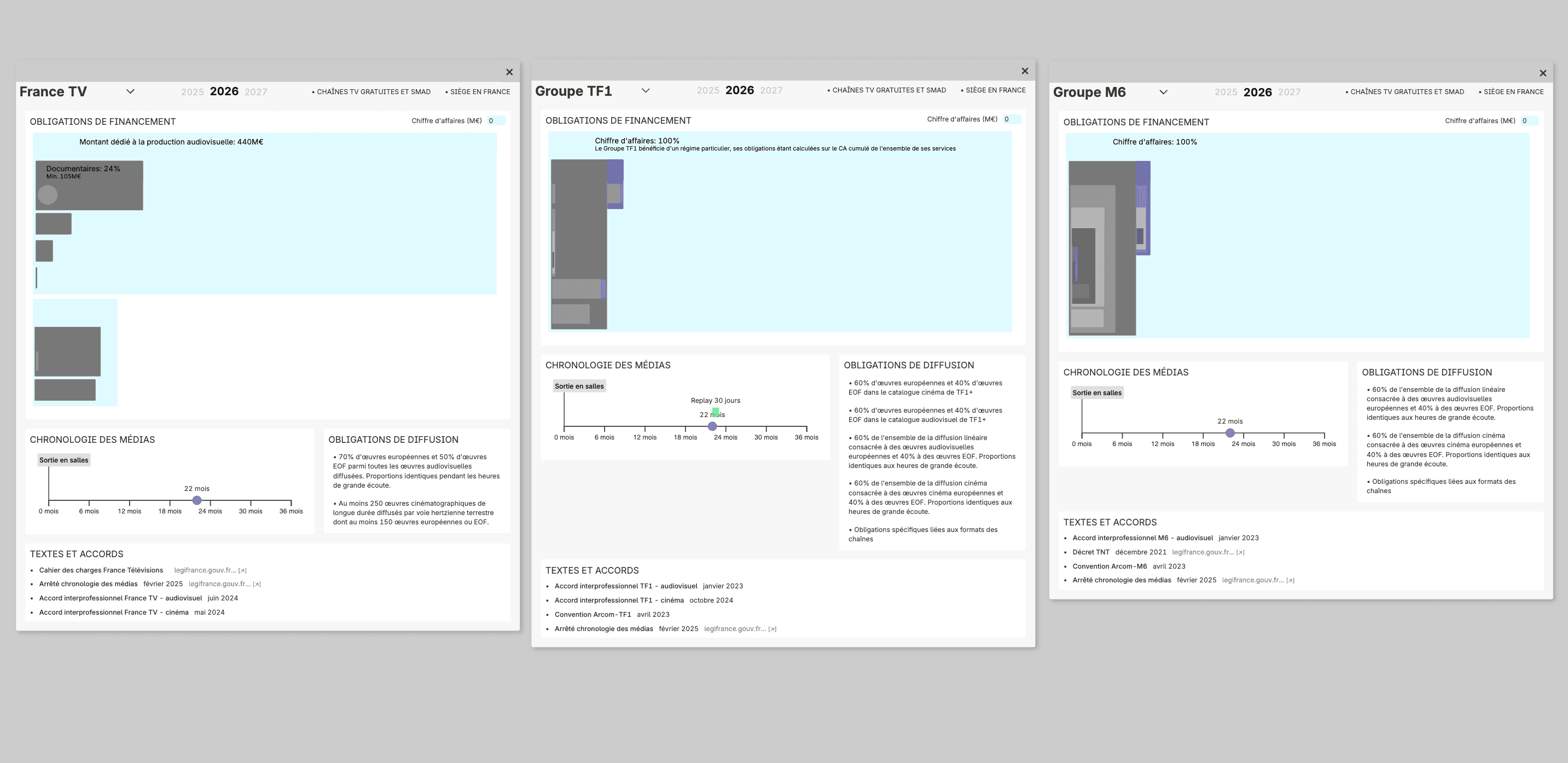
Although their relative share is declining, linear broadcasters continue to provide three-quarters of the funding for French production. France Télévisions remains the leading contributor to audiovisual production, with €403 million in 2024 (35% of declared expenditure). Christophe Tardieu, secretary-general of the public broadcaster, nevertheless expressed his reservations during a round-table discussion at the National Assembly on 3 December 2025,10 emphasising that it is difficult to accept a 22-month window for the public service when it provides more funding than the platforms. The established players are calling for their privileged relationships to be preserved rather than giving in to the “American siren calls”.
Apple TV+, Crunchyroll and the YouTube case
The regulatory landscape continues to expand to accommodate new entrants. Platforms such as Crunchyroll and Apple TV+ are now subject to funding obligations for French content. The 2021 SMAD decree applies to any service targeting the French public once it exceeds the thresholds of €5 million in turnover and a 0.5% audience share. Inter-professional agreements were signed to this effect in early 2025 to formalise these commitments.
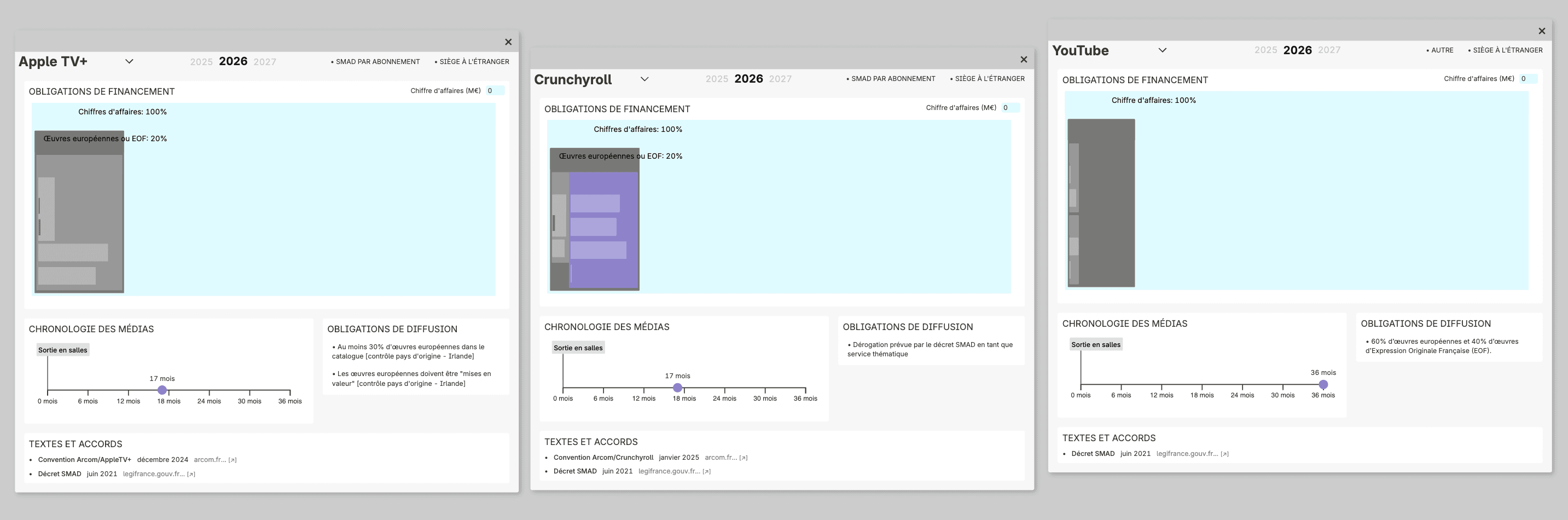
Conversely, YouTube not only escapes these production quotas but also benefits from a particularly criticised tax advantage, with a 66% reduction on its TSV. As the legislator considers that a significant proportion of its catalogue consists of amateur content, the platform is taxed on only a third of its revenue generated in France, whereas traditional services are taxed on almost all of it.
This perception of an ‘unprofessional’ service is increasingly being challenged by industry players. In an interview with Politico11 last March, Ted Sarandos, co-CEO of Netflix, strongly criticised this outdated view, arguing that regulators underestimate YouTube as a direct competitor to television and too often treat it as a mere social network full of cat videos rather than as a major rival in the streaming market. This view of head-on competition is strongly contested by Justine Ryst, YouTube’s director in France. In an interview given the day before to Le Film Français,12 she highlighted the unique nature of a model based on revenue sharing rather than pre-financing. She also believes that the tax allowance merely reflects the reality of a catalogue consisting mainly of music and user-generated content. In her view, the sector is fighting the wrong battle by focusing on this tax regime rather than on the complementary nature of usage.
Conclusion
The inclusion of YouTube, both in this article and on infobligations.arvester.eu, is not only due to its professionalisation, which may to some extent liken it to a SMAD, but also to a growing ‘YouTubisation’ of the SMADs themselves, to the extent that the boundary between video-sharing platforms and ‘traditional’ video-on-demand services is becoming increasingly difficult to draw. The recent and forthcoming diversification of services hitherto legally considered ‘subscription-based’, ‘television’ or ‘cinema’ services is gradually undermining these categories, which are nevertheless at the heart of our model. The trend is towards a proliferation of access models (subscription, subscription + advertising, pay-per-view, free with advertising) and types of content offered (live sport, video games, concerts), alongside a growing aggregation of third-party service offerings, over which the aggregating service has no editorial control. It is therefore likely that, in the near future, our Chronologie des médias (and by extension our regime of funding obligations) will face certain definitional challenges. Any reordering of our distribution windows in the coming months and years must also take this factor into account.
Notes
- ↑
To report any errors, share your feedback or suggest new features, please email us at contact[at]arvester.eu.
- ↑
Arcom (2025). Key figures for audiovisual and film production – Financial year 2024. Available online.
- ↑
For more information: https://arvester.eu/fr/infobligations-le-nouvel-outil-de-reference
- ↑
Nicolas Madelaine and Fabio Benedetti Valentini (2022). Disney withholds its upcoming Christmas animated film from French cinemas. Les Échos, published on 8 June 2022. Available online.
- ↑
Aude Dassonville and Nicole Vulser (2025). Disney+ strengthens its position in the French film industry by securing earlier release dates for its films. Le Monde, published on 29 January 2025. Available online.
- ↑
Elsa Keslassy (2025). « Netflix Lodges Appeal to France’s Council of State Over Windowing Rules: ‘Taking a Stand Against an Imbalanced and Unfair System’. » Variety, 11 avril 2025. Available online.
- ↑
Netflix had previously signed an agreement for a 15-month window, which ended in 2026.
- ↑
Maxime Saada, Chairman of Canal+: “The French film industry is in danger of collapsing under the blows dealt to its three pillars.” Le Monde, 6 February 2025. Available online.
- ↑
A recording of the conference is available on the Senate’s website.
- ↑
Read the detailed account of the debate written by Florian Krieg, editor-in-chief of Le Film français. Available online.
- ↑
Carrie Budoff Brown (2026). Netflix’s Chief Opens Up About Trump, YouTube and Europe. Politico, le 17 mars 2026. Available online.
- ↑
Florian Krieg (2026). [Interview] Justine Ryst: ‘YouTube is a net contributor to creativity’, Le Film Français, 16 March 2026. Available online.